

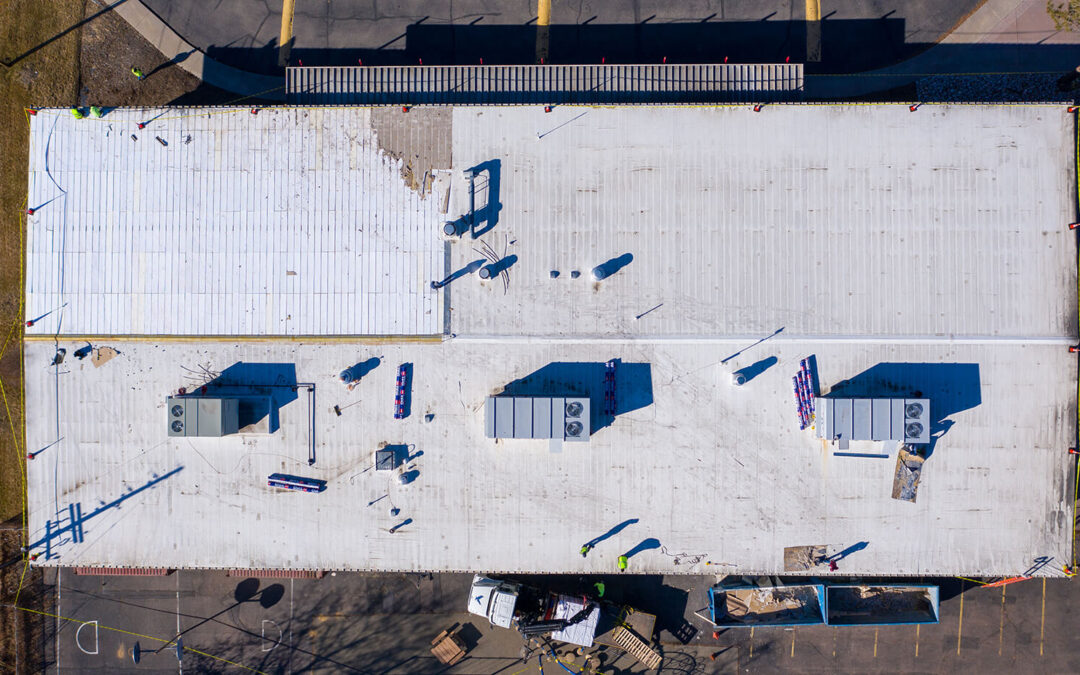
Flat roofs are a smart, efficient choice for many commercial buildings across Colorado. From office complexes and warehouses to retail centers and multifamily properties, flat and low-slope roofing systems offer durability and flexibility when properly installed. But like any roofing system, flat roofs require maintenance and eventually, repairs.
So how do you actually repair a flat roof? The answer depends on the type of roofing system, the extent of the damage, and Colorado’s unique climate conditions. Understanding the repair process can help property owners make informed decisions, avoid unnecessary replacements, and extend the life of their roof.
This guide walks through how flat roof repairs are approached professionally, what problems are most common, and when it’s time to call an expert.
Why Flat Roofs Need Specialized Repair
Unlike pitched roofs, flat roofs don’t shed water quickly. They rely on membranes, seams, and drainage systems to keep moisture out. In Colorado, where roofs face heavy snow, intense sun, hail, and freeze-thaw cycles, even small issues can turn into major problems if left unaddressed.
Common stressors on flat roofs include:
- Ponding water after rain or snowmelt
- UV degradation at high elevations
- Expansion and contraction from temperature swings
- Snow load pressure during winter months
- Wind uplift around edges and penetrations
Because of these factors, flat roof repair is not a one-size-fits-all process. It requires experience, proper diagnostics, and materials designed for Colorado’s climate.
Step 1: Identify the Source of the Problem
The first step in repairing a flat roof is determining where the issue is coming from. Leaks don’t always appear directly below the damaged area, which makes professional inspection critical.
During a flat roof inspection, contractors look for:
- Open seams or split membranes
- Cracks, punctures, or blisters
- Loose or deteriorated flashing
- Drainage blockages or ponding areas
- Damage around rooftop equipment
- Signs of trapped moisture beneath the surface
At Integrity Pro Roofing, inspections often include digital roof analysis, moisture detection, and visual documentation, allowing property owners to clearly understand the condition of their roof before any work begins.
Step 2: Clean and Prepare the Repair Area
Once the problem area is identified, proper surface preparation is essential. Flat roof repairs will not last if debris, moisture, or contaminants remain on the surface.
Preparation typically includes:
- Removing dirt, debris, and standing water
- Drying the affected area completely
- Cutting away damaged membrane sections if needed
- Cleaning seams to ensure proper adhesion
This step ensures that repair materials bond correctly and perform as intended, especially important in Denver’s fluctuating temperatures.
Step 3: Repair Based on Roofing System Type
Different flat roofing systems require different repair methods. Here’s how repairs are typically handled by system type:
EPDM (Rubber Roofing) Repairs
EPDM repairs often involve patching damaged areas with compatible rubber membranes and adhesives. Seams may be resealed, and flashing reinforced to restore waterproofing. Because EPDM expands and contracts significantly, repairs must allow for movement without cracking.
TPO and PVC Roofing Repairs
TPO and PVC membranes are repaired using heat-welded patches. This process fuses the new material to the existing membrane, creating a seamless, watertight bond. Proper temperature control and experienced technicians are critical.
Modified Bitumen Repairs
Modified bitumen roofs are typically repaired by applying reinforced membranes or sealants to damaged sections. In some cases, surface coatings are added to protect against further UV and moisture damage.
Flat Metal Roof Repairs
Metal roof repairs may involve tightening or replacing fasteners, sealing seams, treating corrosion, or reinforcing flashing. Coatings are often applied to extend lifespan and improve waterproofing.
Step 4: Address Drainage and Ponding Water
One of the most common causes of flat roof failure is poor drainage. If water remains on the roof longer than 48 hours, repairs will not hold long-term.
Drainage solutions may include:
- Clearing or replacing clogged drains and scuppers
- Adjusting slope or installing tapered insulation
- Reinforcing low areas with additional membrane layers
- Installing protective coatings to resist standing water
Step 5: Reinforce Seams, Edges, and Penetrations
Most flat roof leaks occur at seams, edges, and penetrations. A thorough repair addresses these vulnerable areas.
- Resealing perimeter edges
- Reinforcing seams with fabric and sealant
- Repairing flashing around HVAC units and vents
- Securing loose rooftop components
Step 6: Apply Protective Coatings (When Appropriate)
For aging flat roofs that are still structurally sound, roof coatings can be an excellent repair strategy. Coatings create a seamless barrier that protects against UV exposure, moisture, and temperature extremes.
Step 7: Test and Inspect the Repair
Once repairs are complete, the roof is inspected again to ensure seams are properly sealed, repairs are fully bonded, and drainage is functioning correctly.
When Repairs Are Enough and When They’re Not
Flat roof repairs are highly effective when damage is localized. However, repairs may not be sufficient if the roof has widespread moisture saturation, extensive membrane deterioration, or structural components are compromised.
Why DIY Flat Roof Repairs Are Risky
While it may be tempting to attempt a quick fix, DIY flat roof repairs often fail due to incorrect materials, poor surface preparation, or inadequate seam sealing. Improper repairs can void warranties.
The Importance of Ongoing Maintenance
The best way to minimize flat roof repairs is through regular inspections. In Colorado, inspections are recommended before winter, after spring snowmelt, and following major storms.
Trust Integrity Pro Roofing for Flat Roof Repair in Colorado
At Integrity Pro Roofing, we specialize in flat and flat metal roof repair for commercial properties throughout Denver and the Colorado Rockies. We offer complimentary roof inspections and digital analysis to deliver long-lasting results.
If your flat roof is leaking, aging, or showing signs of wear, don’t wait for the damage to spread. Schedule your free flat roof inspection today to prevent problems before they become major issues.