
If you manage or own a commercial building in Colorado, your roof is one of your most important assets. It protects your business operations, tenants, and equipment from the state’s unpredictable weather. And if that roof happens to be flat, like most commercial roofs in Colorado, you may be wondering: How long will it actually last?
The lifespan of a flat roof depends on several key factors: the material used, installation quality, ongoing maintenance, and, of course, the harsh mountain climate unique to areas like Winter Park, Fraser, and Grand Lake.
Let’s examine how long different flat roofing systems last, what affects their durability, and how to prepare your flat roof to extend the life of your investment.
Why Flat Roofs Are Common on Commercial Buildings
Flat and low-slope roofs dominate commercial architecture for a reason. They’re cost-effective to install, make better use of space, and provide easy access for HVAC units and solar panels.
However, these advantages also come with unique challenges, especially in the Colorado Rockies, where roofs face high UV exposure, heavy snow loads, and rapid temperature swings. The good news? With proper materials and maintenance, a commercial flat roof can last decades.
Average Lifespans of Common Flat Roofing Systems
There’s no single answer to how long a flat roof will last—it all comes down to the material. Here’s a breakdown of the most common commercial roofing systems used in Colorado and their expected lifespans:
1. TPO (Thermoplastic Polyolefin)
Lifespan: 20–30 years
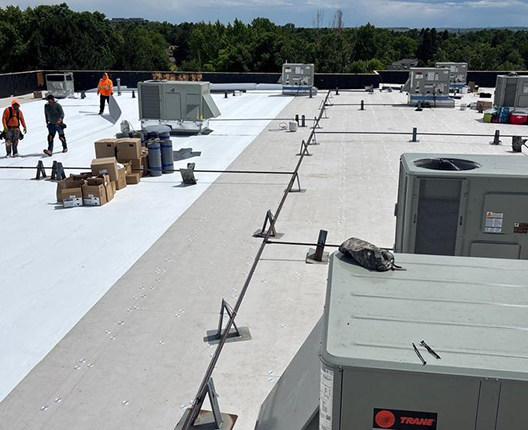
TPO roofing has become one of the most popular choices for commercial properties in Colorado. Its heat-reflective surface and energy efficiency help combat high-altitude UV exposure. When properly installed and maintained, a TPO roof can easily last two to three decades.
It’s especially well-suited for warehouses, retail buildings, and office complexes where energy savings are a priority.
2. PVC (Polyvinyl Chloride)
Lifespan: 25–35 years
PVC is one of the most durable flat roofing materials available. It’s known for its chemical resistance, strength, and long-lasting seam integrity, making it ideal for restaurants, manufacturing facilities, and other buildings with rooftop exhaust or grease vents.
While PVC roofs tend to cost more upfront, their lifespan and minimal maintenance needs make them a strong long-term investment for commercial property owners.
3. EPDM (Ethylene Propylene Diene Monomer)
Lifespan: 25–40 years
EPDM, often called “rubber roofing,” is one of the oldest and most trusted flat roof systems on the market. It performs exceptionally well in cold, snowy environments like Winter Park. Its flexibility allows it to expand and contract with temperature changes without cracking, which is critical in a mountain climate.
When installed correctly and maintained regularly, EPDM roofs can last up to 40 years or more.
4. Modified Bitumen
Lifespan: 20–25 years
Modified bitumen combines the best of traditional asphalt roofing with modern polymer technology. It’s typically installed in multiple layers, which enhances durability and waterproofing.
This system is particularly popular on smaller commercial buildings and multi-family housing due to its affordability and solid performance in freezing conditions.
5. Low Slope Metal Roofing
Lifespan: 40–60+ years
If longevity is your top priority, metal roofing is hard to beat. Standing seam metal panels, often made from steel or aluminum, are highly resistant to snow, ice, and wind. Metal roofs are also recyclable, low-maintenance, and energy-efficient, reflecting sunlight to keep your building cooler in summer.
In the Colorado mountains, where snow and hail are frequent, metal flat roofs often outlast all other options.
What Affects How Long a Flat Roof Lasts in Colorado
Even the best roofing material can fail early if not properly installed or maintained. Here are the key factors that determine how long your roof will last in Colorado’s rugged environment:
1. Climate and Weather Extremes
Colorado’s combination of intense UV radiation, heavy snow, and freeze-thaw cycles puts every roof to the test. High-altitude sun exposure can degrade membranes over time, while snow and ice add significant weight.
Choosing a material rated for your specific elevation and ensuring proper snow load management is critical for long-term performance.
2. Drainage and Ponding Water
Flat roofs don’t shed water the same way pitched roofs do. Standing water, known as “ponding,” is one of the most common causes of early roof failure.
Proper drainage design and regular cleaning of roof drains, scuppers, and gutters can prevent water buildup and protect seams and membranes from deterioration.
3. Installation Quality
A commercial roof is only as good as the crew that installs it. Even small errors in seam welding, flashing, or insulation can dramatically reduce the lifespan.
That’s why it’s essential to work with an experienced, licensed roofing contractor who understands how to build for Denver’s sun and Winter Park’s snow.
4. Preventive Maintenance
Routine inspections and minor repairs go a long way toward maximizing roof life. At Integrity Pro Roofing, we recommend biannual inspections, typically before winter and after the spring thaw, to catch potential issues early.
5. Foot Traffic and Equipment Loads
Commercial roofs often support heavy equipment like HVAC systems, vents, and solar arrays. Over time, this adds stress to certain sections of the roof. Walk pads, reinforced membranes, and protective coatings can help prevent wear in high-traffic areas.
How to Extend the Life of Your Flat Roof
If your roof is approaching the 20-year mark, or you simply want to maximize your investment, here’s how to get the most life out of it:
- Schedule regular inspections to identify early signs of wear or damage.
- Clean drains and gutters to prevent water pooling.
- Reapply roof coatings every few years to enhance UV protection.
- Remove snow buildup safely to reduce stress on the structure.
- Address small leaks quickly before they turn into major problems.
The combination of proactive care and professional oversight can add 5–10 years or more to your roof’s lifespan.
Signs Your Commercial Flat Roof May Need Replacement
Even the toughest roof eventually wears out. Watch for these warning signs that it’s nearing the end of its service life:
- Frequent or recurring leaks
- Visible cracks, blisters, or tears in the membrane
- Soft or sagging areas when walked on
- Rising energy bills from heat loss or poor insulation
- Water stains on interior ceilings or walls
If you’re unsure about your roof’s condition, schedule a digital roof analysis with Integrity Pro Roofing. We’ll inspect your system, document any issues, and provide a clear, honest assessment of its remaining lifespan.
Ready to find out how long your roof has left?
At Integrity Pro Roofing, we specialize in flat and flat metal roofing systems designed for Colorado’s unique environment. From snow-heavy mountain towns like Winter Park, Fraser, and Grand Lake to Front Range communities, our team provides high-quality installations, repairs, and maintenance that protect your property for decades.
With more than a decade of experience and a reputation built on honesty and craftsmanship, we’re here to ensure your commercial roof performs its best, season after season. Schedule your free inspection and digital roof report today.